I usually only read the newspaper when travelling and either do the ‘free mineral water with newspaper’ deal (usually the Telegraph, maybe the only way they can sell newspapers), or whatever they have in the hotel or plane.
The front-page news today is the Israeli attack on the Gaza aid convoy, which needs no further comment.
of MPs
However, I also got yesterday’s Independent when I arrived at the Holiday Inn near midnight. One of the main stories then was still the ‘outing’ and resignation of David Laws. The key issue here (at least in principle) was not that nature of his personal relationships, but that he had not disclosed that the flat on which he was claiming rent belonged to his partner.
I was glad to see Mark Pack’s commentary in today’s Independent take a robust view of this, noting that while Laws may have broken rules (still to be determined), there had been no financial gain involved, and indeed the arrangement had saved the taxpayer money. Pack’s contempt of the Telegraph was perhaps not unexpected in a column in a rival newspaper, but echoed my own feelings.
I was happily abroad during the height of the MPs expense ‘scandal’ last year, but was appalled at the coverage, not least because my travels take me to countries in Europe which would give anything to have the high standards of public office we take for granted in the UK. In the end a handful of MPs may (still sub judice) have abused the system, but the vast majority were simply trying to do their job.
A short while ago I happened on the web on a page detailing the expenses of a Cardiff (now ex) MP Julie Morgan, when MPs expenses came under the spotlight, she rechecked her previous claims and indeed, with more careful checking, it turned out that the claims she had made on her mortgage did not match the actual expenditure. Over the five years of the last parliament she had accidentally over-claimed in two years to the total of £800 … but in the other three years had under-claimed to the tune of £1900. The rules meant she could not retrospectively be paid for the under-claimed years, but did pay back the £800 for the over-claims. Despite being £1100 out of pocket, one of the lowest claiming MPs and indeed paying significant amount of her own salary to help maintain her constituency office, on the books she will part of the statistics of the large number of MPs who repaid expenses and so appear to have been doing wrong. Crazy!
and of Marbles
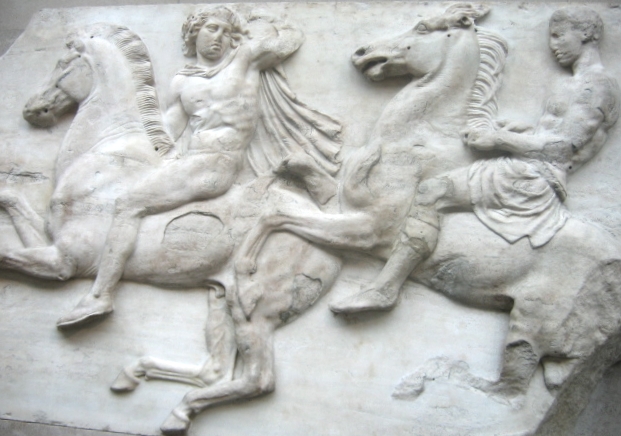 Back to today’s newspaper and deeper into the Independent a very old story that is entering a new phase: the fight for the return of treasures from around the world displayed in British Museums. The most well know is of course the Elgin Marbles (maybe Germany may claim them as security for Greece’s Euro-bailout), but others include African treasures taken during punitive raids by British soldiers in the 19th Century.
The issues seem clear-cut for a Liberal-minded Independent reader, but maybe things are more complicated; certainly some of the items, including the bronze ‘Birmingham Buddha’ would not have survived to the present day if they had not been removed – if only the Victorian adventurers had also removed some of the giant Buddha statues destroyed by the Taliban in the 1990s.
I wonder how far repatriation should go, what is the statute of limitations for national treasure? Maybe as the Birmingham Buddha travels back to India, several hundred shiploads of railtrack and steam trains will be repatriated to the UK, offloaded at Felixstowe docks and moved overland to form a mountainous sculpture of piled steel in the centre of Birmingham.
 Having just been in Italy, I am sure there are many Italian artefacts in British museums, but then in Rome there are a number of Egyptian obelisk’s removed by the Romans 2000 years ago. However, I would be surprised if, in turn, the Egyptians had not taken artefacts from other parts of the ancient world. For that matter, what about the work done by the Israelites in Egypt before the Exodus? If not for the fear it might be taken seriously I might suggest Israel could claim this.
In fact, these treasures are often more symbolic of the greater rape of natural resources and human labour that still continues today in many parts of the world today. Indeed being brought up in the shadow of the South Wales coal valleys, I am well aware that the benefits of natural resources rarely go to the countries where they are found nor the labourers who mine them.
One of the key arguments against repatriation of ancient artefacts is that the curatorial standards are higher where they are presently. Indeed the pillage of Iraqi sites after the fall of Saddam could be seen as overwhelming evidence that institutions such as the British Museum do the whole world a service. Repatriation of artefacts to less secure countries would put at risk our shared global heritage; after all who knows what civilisation the UK and US will decide to decimate next.