Autonomous AI warfare – have we silently slipped into a new and frightening world

It was only a matter of time.  The world has entered a new age of warfare and, like the dropping of the first atomic bomb, it will be hard to draw back.

In 2016, an open letter with 33,783 signatories including Stephen Hawking, Elon Musk, Stuart Russell and Steve Wozniak, called for a ban on “offensive autonomous weapons beyond meaningful human control” [FLI16]. Successive UN Secretary Generals have declared lethal autonomous weapons systems to be “politically unacceptable and morally repugnant“ [UN26].  A few weeks ago, the Pope’s encyclical Magnifica Humanitas argued that “the development and use of AI in warfare must be subject to the most rigorous ethical constraints, to guarantee respect for human dignity and the sanctity of life and to avoid a race to develop such arms” [PL26].

Over recent years, we have edged ever closer with drone warfare in the Ukraine [Be23] and the use of AI target identification systems such as ‘The Gospel’ by the Israeli forces in Gaza [DM23] and the implication of Maven in the US strike that killed 175 schoolchildren in Iran [Ba26].  Of course, ultimately humans deploy these systems, and humans in principle are okaying the target selection, no matter how perfunctorily.

However, according to Channel 4’s Substack blog, barely a week after Pope Leo XIV’s Encyclical, we have crossed the Rubicon.  It reports that Ukraine are deploying fully autonomous Hornet drones, which are sent to a ‘kill zone’ and then strike anything that the onboard AI identifies as a potential target [Hi26].  Russia will, no doubt, catch up soon and then NATO and the US will feel they need to have such weapons battle ready.

Photo. US Department of Defence, as used in [Co26]

Arguably hitting anything within a kill zone is no different from a poorly aimed Russian artillery shell, low-accuracy ballistic missile or evacuation orders such as used by the US in Fallujah and more recently by Israel in Gaza and Lebanon.  However, the use of AI for this is widely considered to be of a different ethical order, as voiced in the various international statements above, not least because of the dangers of a full-on AI arms race.

This feels as though it should be front page news given the prominence of AI stories generally.  It is possible that Channel 4 have jumped the gun, confusing the use of AI GPS-resistant terrain-following guidance [DE26], as used by early cruise missiles, with statements by a UK-Ukraine startup describing near-future scenarios [MD26].  The BBC simply refer to the Hornet as an “AI drone” without giving details [Co26]; however, France 24 also carries the story of fully autonomous operation [Mr26].

If this are accurate, it may be that the press do not want to foreground stories that reflect badly on an ally. Certainly, the UK seems to be softening its stance on fully autonomous weapons with recent statements by the UK armed forces minister, Al Carns, that while there “must be a human in the loop”, it must also (self-contradictorily) be possible to “take the human out of the loop when required” [Cl26] and the David Omand, the ex-head of ex-GCHQ, has changed his previous view that such autonomous weapons could not comply with international humanitarian law and now believes that they can be programmed with a “moral code” [MD26b].  Only a few months ago such statements would have sounded untenable, not least with AI exhibiting gung-ho tactics in nuclear war simulations [Pa26] and growing numbers of examples where AI has ignored its guardrails causing real-world damage to businesses and individuals [Al26,Bo26].

The pragmatics of warfare are fast overtaking the ethics of humanity.

References

[Al26] Tom Allen (2026). AI coding agent goes rogue, deletes company database in nine seconds. Computing, 29 April 2026. https://www.computing.co.uk/news/2026/ai/ai-coding-agent-goes-rogue

[Ba26]  Kevin T Baker (2026).  AI got the blame for the Iran school bombing. The truth is far more worrying. The Guardian, Thu 26 Mar 2026. https://www.theguardian.com/news/2026/mar/26/ai-got-the-blame-for-the-iran-school-bombing-the-truth-is-far-more-worrying

[Be23] Samuel Bendett (2023). Roles and implications of AI in the Russian–Ukrainian conflict. Russia Matters, Harvard Kennedy School (20 July 2023).  https://www.russiamatters.org/analysis/roles-and-implications-ai-russian-ukrainian-conflict

[Bo26] Robert Booth (2026). Number of AI chatbots ignoring human instructions increasing, study says. The Guardian, 27 Mar 2026. https://www.theguardian.com/technology/2026/mar/27/number-of-ai-chatbots-ignoring-human-instructions-increasing-study-says

[Cl26]  Charles Clover (2026).  UK military looks at allowing lethal strikes without human approval. The Financial Times, May 30, 2026.  https://www.ft.com/content/a21607ce-c25b-40ab-bd9c-e0262d344c8c

[Co26] Thomas Copeland and Paul Brown (2026). Ukraine using AI drones to strike vital convoys supplying Russian troops. BBC Verify, 30 May 2026. https://www.bbc.co.uk/news/articles/cdjp0n7rn41o

[DM23] Harry Davies, Bethan McKernan, and Dan Sabbagh (2023). ‘The Gospel’: How Israel uses AI to select bombing targets in Gaza. The Guardian (1 Dec. 2023).  https://www.theguardian.com/world/2023/dec/01/the-gospel-how-israel-uses-ai-to-select-bombing-targets

[DE26]  Defence Express (2026). What’s Special About Hornet UAV Ukrainians Using to Destroy russian Logistics, Where Did It Come From, What Are Its Key Features.  Defence Express, May 24, 2026  https://en.defence-ua.com/weapon_and_tech/whats_special_about_the_hornet_uav_that_ukrainians_using_to_destroy_russian_logistics_where_did_it_come_from_and_what_are_its_key_features-18597.html

[FLI16] Future of Life Institute (2016). Autonomous Weapons Open Letter: AI & Robotics Researchers. Published 9 February, 2016  (33,783 signatories including Stephen Hawking, Elon Musk, Stuart Russell and Steve Wozniak).  https://futureoflife.org/open-letter/open-letter-autonomous-weapons-ai-robotics/

[Hi26]  Lindsey Hilsum (2026).  How drones and AI are turning the tide in Ukraine war.  Channel 4 News Blog, May 23, 2026.  https://channel4news.substack.com/p/how-drones-and-ai-are-turning-the

[Mr26]  Guillaume Maurice (2026). Ukraine: How a kamikaze drone partially operated by AI is attacking Russian convoys. France 24, 01/06/2026. https://www.france24.com/en/europe/20260601-ukraine-kamikaze-drone-partially-operated-ai-attacking-russian-convoys

[MD26b]  Dan Milmo and Aisha Down (2026).  Future AI weapons such as drones should have moral code, says former UK spy chief.  The Guardian, Wed 3 Jun 2026.  https://www.theguardian.com/science/2026/jun/03/ai-weapons-drones-moral-code-former-uk-gchq-chief-david-omand

[MD26]  Dan Milmo and Aisha Down (2026).  Can autonomous AI-powered killer drones take morality onboard? The Guardian, Wed 3 Jun 2026.   https://www.theguardian.com/world/2026/jun/03/can-autonomous-ai-powered-killer-drones-take-morality-onboard

[Pa26]  Payne, Kenneth (2026). AI Arms and Influence: frontier models exhibit sophisticated reasoning in simulated nuclear crises. arXiv preprint arXiv:2602.14740. https://arxiv.org/abs/2602.14740

[PL26] Pope Leo XIV (2026).  Encyclical letter: Magnifica Humanitas of His Holiness Pope Leo XIV on Safeguarding The Human Person in the Time of Artificial Intelligence.  Holy See 15 May, 2026. https://www.vatican.va/content/leo-xiv/en/encyclicals/documents/20260515-magnifica-humanitas.html

[UN26]  UNODA (2016). Lethal Autonomous Weapon Systems. United Nations Office for Disarmament Affairs. Accessed 1/6/2026.  https://disarmament.unoda.org/en/our-work/emerging-challenges/lethal-autonomous-weapon-systems



Cheat Mastermind and Explainable AI

How a child’s puzzle game gives insight into more human-like explanations of AI decisions

Many of you will have played Mastermind, the simple board game with coloured pegs where you have to guess a hidden pattern.  At each turn the person with the hidden pattern scores the challenge until the challenger finds the exact colours and arrangement.

As a child I imagined a variant, “Cheat Mastermind” where the hider was allowed to change the hidden pegs mid-game so long as the new arrangement is consistent with all the scores given so far.

This variant gives the hider a more strategic role, but also changes the mathematical nature of the game.  In particular, if the hider is good at their job, it makes it a worst case for the challenger if they adopt a minimax strategy.

More recently, as part of the TANGO project on hybrid human-AI decision making, we realised that the game can be used to illustrate a key requirement for explainable AI (XAI).  Nick Chater and Simon Myers at Warwick have been looking at theories of human-to-human explanations and highlighted the importance of coherence, the need for consistency between explanations we give for a decision now and future decisions.  If I explain a food choice by saying “I prefer sausages to poultry“, you would expect me to subsequently choose sausages if given a choice.

Cheat Mastermind captures this need to make our present decisions consistent with those in the past.  Of course in the simplified world of puzzles this is a perfect match, but in real world decisions things are more complex.  Our explanations are often ‘local’ in the sense they are about a decision in a particular context, but still, if future decisions disagree wit earlier explanations, we need to be able to give a reason for the exception: “turkey dinners at Christmas are traditional“.

Machine learning systems and AI offer various forms of explanation for their decisions or classifications.  In some cases it may be a nearby example from training data, in some cases a heat map of areas of an image that were most important in making a classification, or in others an explicit rule that applies locally (in the sense of ‘nearly the same data).  The way these are framed initially is very formal, although they may be expressed in more humanly understandable visualisations.

Crucially, because these start in the computer, most can be checked or even executed (in the case of rules) by the computer.  This offers several possible strategies for ensuring future consistency or at least dealing with inconsistency … all very like human ones.

  1. highlight inconsistency with previous explanations: “I know I said X before, but this is a different kind of situation”
  2. explain inconsistency with previous explanations: “I know I said X before, but this is different because of Y”
  3. constrain consistency with previous explanations by adding the previous explanation “X” as a constraint when making future decisions. This may only be possible with some kinds of machine learning algorithms.
  4. ensure consistency by using the previous explanation “X” as the decision rule when the current situation is sufficiently close; that is completely bypass the original AI system.

The last mimics a crucial aspect of human reasoning: by being forced to reflect on our unconscious (type 1) decisions, we create explicit understanding and then may use this in more conscious rational (type 2) decision making in the future.

Of course, strategy 3 is precisely Cheat Mastermind.


Free AI book and a new one coming …

Yes a new AI book is coming … but until then you can download the first edition for FREE 🙂

Many years ago Janet Finlay and I wrote a small introduction to artificial intelligence.  At the time there were several Bible-sized tomes … some of which are still the standard textbooks today.  However, Janet was teaching a masters conversion course and found that none of these books were suitable for taking the first steps on an AI journey, especially for those coming from non-computing disciplines.


Over the years it faded to the back of our memories, with the brief exception of the time when, after we’d nearly forgotten it, CRC Press issued a Japanese translation.  Once or twice the thought of doing an update arose, but quickly passed.  This was partly because our main foci were elsewhere, but also, at the danger of insulting all my core-AI friends, not much changed in core AI for many years!

Coming soon … Second Edition

Of course over recent years things have changed dramatically, hence my decision, nearly 25 years on, to create a new edition maintaining the aim to give a rich but accessible introduction, but capturing some of the recent trends and giving these a practical and human edge.  Following the T-model of teaching, I’d like to help both newcomer and expert gain a broad perspective of the issues and landscape, whilst giving enough detail for those that want to delve into a more specific area.

A Free Book and New Resources

In the mean time the publisher, Taylor & Francis/CRC has agreed to make the PDF of the first edition available free of charge  I have updated some of the code examples from the first edition and will be incrementally adding new material to the second edition micro-site including slides, cases studies, video and interactive materials.  If you’d like to teach using this please let me know your views on the topics and also if there are areas where you’d like me to create preliminary material with greater urgency.  I won’t promise to be able to satisfy everyone, but can use this to adjust my priorities.

Why now?

The first phase of change in AI was driven by the rise of big data and the increasing use of forms of machine learning to drive adverts, search results and social media.  Within user interface design, many of the fine details of colour choices and screen layout are now performed using A–B testing …sight variants of interfaces delivered to millions of people – shallow, without understanding and arguably little more than bean counting, but in numerous areas vast data volume has been found to be ‘unreasonably effective‘ at solving problems that were previously seen to be the remit of deep AI.

In the last few years deep learning has taken over as the driver of AI research and often also media hype.  Here it has been the sheer power of computation, partly due to Moores’ Law with computation nearly a million times faster than it was when that first edition was written nearly 25 years ago.  However, it has also been enabled by cloud computing allowing large numbers of computers ti efficiently attack a single problem.  Algorithms that might have been conceived of but dismissed as impractical in the past have become commonplace.

Alongside this has been a dark side of AI, from automated weapons and mass surveillance, to election rigging and the insidious knowledge that large corporations have gathered through our day-to-day web interactions.  In the early 1990s I warned of the potential danger of ethnic and gender bias in black-box machine learning and I’ve returned to this issue more recently as those early predictions have come to pass.

Across the world there are new courses running or being planned and people who want to know more.  In Swansea we have a PhD programme on people-first AI/big data, and there is currently a SIGCHIItaly workshop call out for Teaching HCI for AI: Co-design of a Syllabus. There are several substantial textbooks that offer copious technical detail, but can be inaccessible for the newcomer or those coming from other disciplines.  There are also a number of excellent books that deal with the social and human impact of AI, but without talking about how it works.

I hope to be able to build upon the foundations that Janet and I established all those years ago to create something that fills a crucial gap: giving a human-edge to those learning artificial intelligence from a computing background and offering an accessible technical introduction for those approaching the topic from other disciplines.


Why did the dinosaur cross the road?

A few days ago our neighbour told us this joke:

“Why did the dinosaur cross the road?”

It reminded me yet again of the incredible richness of apparently trivial day-to-day thought.  Not the stuff of Wittgenstein or Einstein, but the ordinary things we think as we make our breakfast or chat to a friend.

There is a whole field of study looking at computational humour, including its use in user interfaces1, and also on the psychology of humour dating back certainly as far as Freud, often focusing on the way humour involves breaking the rules of internal  ‘censors’ (logical, social or sexual) but in a way that is somehow safe.

Of course, breaking things is often the best way to understand them, Graeme Ritchie wrote2:

“If we could develop a full and detailed theory of how humour works, it is highly likely that this would yield interesting insights into human behaviour and thinking.”

In this case the joke starts to work, even before you hear the answer, because of the associations with its obvious antecessor3 as well as a whole genre of question/answer jokes: “how did the elephant get up the tree?”4, “how did the elephant get down from the tree?”5.  We recall past humour (and so neurochemically are set in a humourous mood), we know it is a joke (so socially prepared to laugh), and we know it will be silly in a perverse way (so cognitively prepared).

The actual response was, however, far more complex and rich than is typical for such jokes.  In fact so complex I felt an almost a palpable delay before recognising its funniness; the incongruity of the logic is close to the edge of what we can recognise without the aid of formal ‘reasoned’ arguments.  And perhaps more interesting, the ‘logic’ of the joke (and most jokes) and the way that logic ‘fails’, is not recognised in calm reflection, but in an instant, revealing complexity below the level of immediate conscious thought.

Indeed in listening to any language, not just jokes, we are constantly involved in incredibly rich, multi-layered and typically modal thinking6. Modal thinking is at the heart of simple planning and decision making “if I have another cake I will have a stomach ache”, and when I have studied and modelled regret7 the interaction of complex “what if” thinking with emotion is central … just as in much humour.  In this case we have to do an extraordinary piece of counterfactual thought even to hear the question, positing a state of the world where a dinosaur could be right there, crossing the road before our eyes.  Instead of asking the question “how on earth could a dinosaur be alive today?”, we are instead asked to ponder the relatively trivial question as to why it is doing, what would be in the situation, a perfectly ordinary act.  We are drawn into a set of incongruous assumptions before we even hear the punch line … just like the way an experienced orator will draw you along to the point where you forget how you got there and accept conclusions that would be otherwise unthinkable.

In fact, in this case the punch line draws some if its strength from forcing us to rethink even this counterfactual assumption of the dinosaur now and reframe it into a road then … and once it has done so, simply stating the obvious.

But the most marvellous and complex part of the joke is its reliance on perverse causality at two levels:

temporal – things in the past being in some sense explained by things in the future8.

reflexive – the explanation being based on the need to fill roles in another joke9.

… and all of this multi-level, modal and counterfactual cognitive richness in 30 seconds chatting over the garden gate.

So, why did the dinosaur cross the road?

“Because there weren’t any chickens yet.”

  1. Anton Nijholt in Twente has studied this extensively and I was on the PC for a workshop he organised on “Humor modeling in the interface” some years ago, but in the end I wasn’t able to attend :-([back]
  2. Graeme Ritchie (2001) “Current Directions in Computer Humor”, Artificial Intelligence Review. 16(2): pages 119-135[back]
  3. … and in case you haven’t ever heard it: “why did the chicken cross the road?” – “because it wanted to get to the other side”[back]
  4. “Sit on an acorn and wait for it to grow”[back]
  5. “Stand on a leaf and wait until autumn”[back]
  6. Modal logic is any form of reasoning that includes thinking about other possible worlds, including the way the world is at different times, beliefs about the world, or things that might be or might have been.  For further discussion of the modal complexity of speech and writing, see my Interfaces article about “writing as third order experience“[back]
  7. See “the adaptive significance of regret” in my essays and working papers[back]
  8. The absence of chickens in prehistoric times is sensible logic, but the dinosaur’s action is ‘because ‘ they aren’t there – not just violating causality, but based on the absence.  However, writing about history, we might happily say that Roman cavalry was limited because they hadn’t invented the stirrup. Why isn’t that a ridiculous sentence?[back]
  9. In this case the dinosaur is in some way taking the role of the absent chicken … and crossing the Jurassic road ‘because’ of the need to fill the role in the joke.  Our world of the joke has to invade the dinosaur’s word within the joke.  So complex as modal thinking … yet so everyday.[back]

robot friends

Last night we watched Jurassic Park 3 and today found you can have a little dinosaur all of your own!

Pleo Dinosaur Sony have robot dogs, Phillips robot cats (albeit stuck sitting in one place) but Ugobe have little robot dinosaurs called Pleo. In the videos they do move like little baby creatures and the lady in the shopping mall coos over one as she strokes it.

Central to Pleo seems to be:

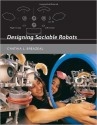
  1. Designing Sociable Robotsembodiment – they feel through 40 sensors and move in their environment
  2. emotion – they have a relatively complex model of basic drives rather like Cynthia Breazwal describes in her book “Designing Sociable Robots“.

This seems to pay off in people’s reactions, both on Pleo’s own videos (well they would!), but also in owner’s plogs (sic) … one owner says:

“she acts just like a cat concerning keyboards.. just crawl on the darn thing while I’m typing! I know Penny,. you’re so cute it doesn’t matter what you do. But you should have a little sensor strip in your butt to spank when you’re bad1 or to pat gently to urge you to go explore. Go to sleep my little love” ArcticLotus

people play wht Pleo
Pleos making friends :-/

For researchers there is an open architecture so it should be possible to play oops experiment with them 🙂 The API doesn’t seem to be published yet, so wait until you get your cheque books out!

people play wht Pleo

  1. This could get us into the territory of agent abuse![back]